Marc Lou built the revenue-verification marketplace TrustMRR alone with Cursor: $29,987 in the last 30 days, payment-verified
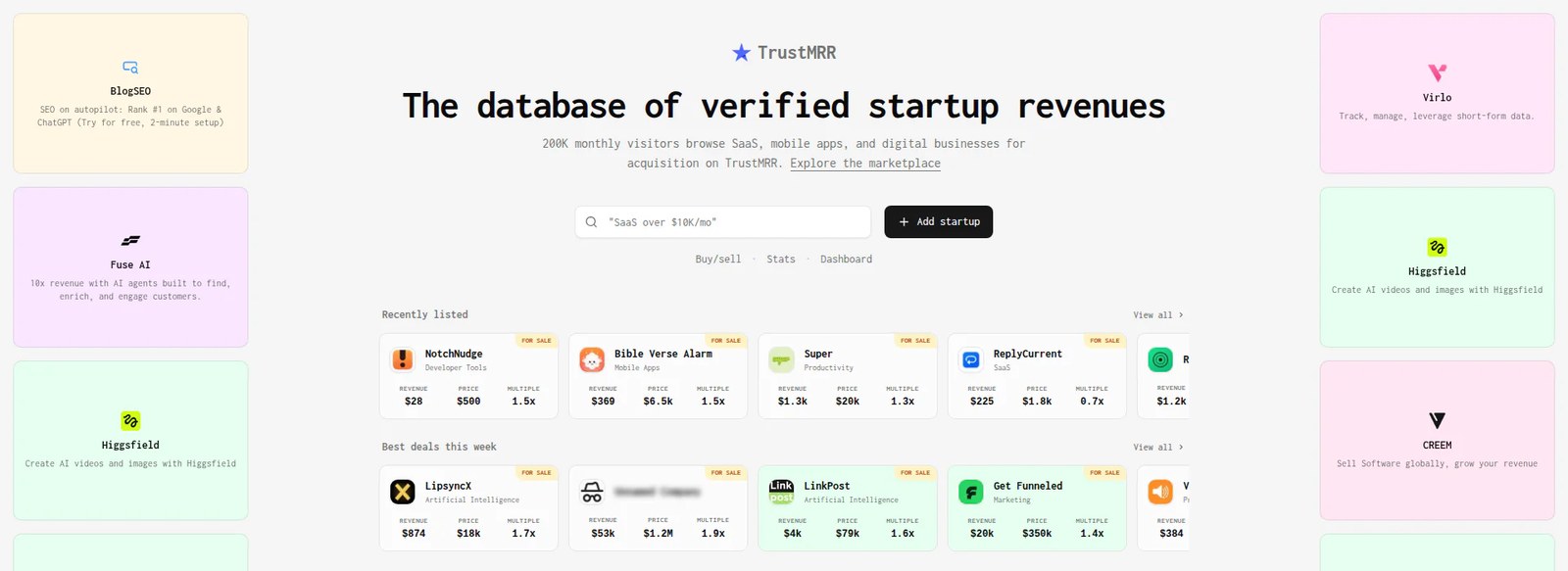
A post complaining about fake revenue screenshots led him to build the first version in 6 hours. Nine months later, it had become a marketplace for buying and selling software businesses.
Key points from sources
- TrustMRR project page, November 18, 2026: $29,987 in revenue over the last 30 days, $11,992 MRR, 8 active subscriptions, $418,065 total revenue.
- Marc Lou's write-up, September 1, 2026: all ad slots sold out within 3 days of launch, bringing in $20,378.
- Same write-up: July 2026 was the best month, with $44,000 in revenue and a 90% profit margin.
- TrustMRR about page, data as of September 24, 2026: about 200,000 unique visitors a month.
The last-30-days figure is read directly from the payment account by TrustMRR. Monthly revenue, traffic, and profit margin are numbers Marc published himself.
Who is he?
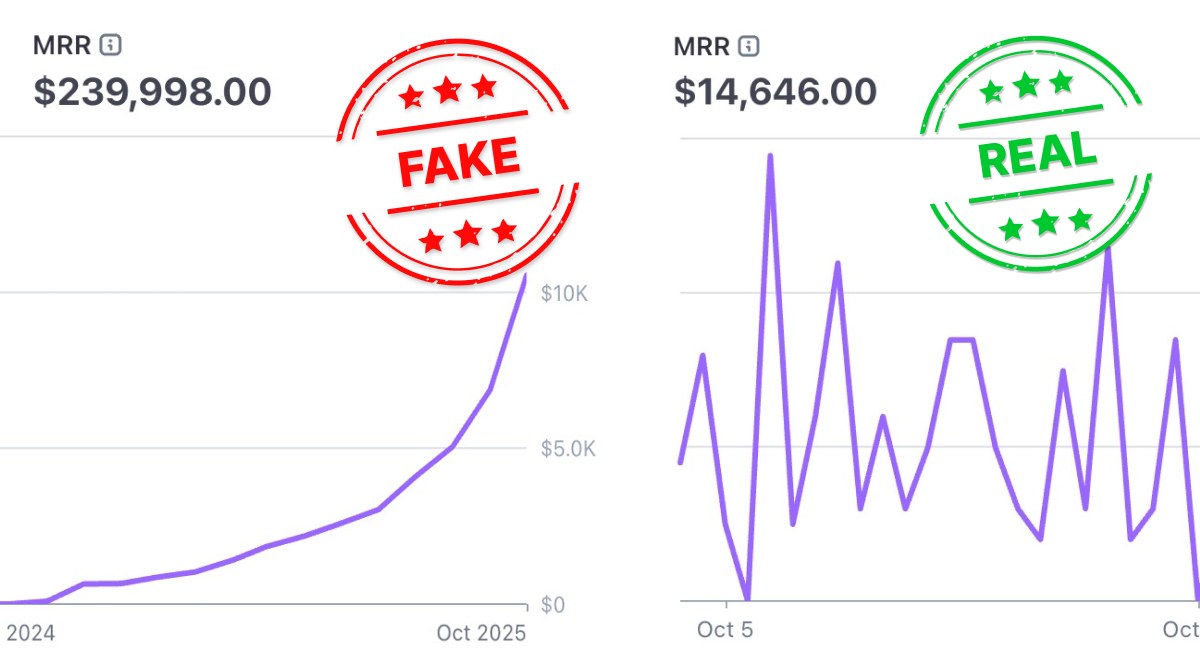
Marc Lou lives in Singapore. He has worked for himself for more than eight years, has built and sold several products, and has always shared his revenue in public. On October 28, 2025, Pieter Levels posted that many revenue screenshots online are fake. Marc cared about this: a screenshot takes minutes to fake, readers can't tell real from fake, and founders who honestly share their revenue have no way to prove it.
What did he build?
TrustMRR lets founders connect their payment account so revenue is read straight from the source instead of from a screenshot.
Before: Before, revenue was a screenshot posted by the founder, and you either believed it or you didn't.
Now: Now, once a founder connects a read-only payment account, the revenue appears directly on the page. Buyers can also review the data, contact the founder, negotiate, sign documents, and use escrow in the same place.
A month after launch, it went from a leaderboard to a marketplace for buying and selling software businesses. According to the about page, by September 2026 the platform was closing close to one deal a day.
How does AI fit in?
The next morning he opened Cursor and asked it to build a place where founders could verify revenue with a read-only payment account. Six hours later he had a leaderboard with just two columns: total revenue and MRR.
He hasn't written publicly about any problems he hit while using Cursor. The real setbacks were in the product:
- After the launch buzz faded, traffic fell from 146,810 in November to 91,415 in December, a 38% drop.
- He tried more than ten ideas in a row: a game guessing which startup earns more, categories, founder pages, a map, charts, emails, more payment providers, and small tools. The game post got 339,000 views, but in his words, nobody really cared.
- Then a founder asked whether they could list their project for sale. He added a small marketplace on November 30, 2025, and the first deal closed 5 days later.
- In April 2026, traffic dropped another 35%, to 118,300. In May, revenue fell to $23,695.
How did he find customers?
- A launch post plus something people could buy right away. He launched on October 30, 2025, and the post got 2.9 million views. He put a few ad slots on the side of the page, starting at $299 a month and rising as the post took off, from $699 and $999 up to $1,499. They all sold out in 3 days, bringing in $20,378.
- Make every feature worth sharing. He added screenshots, tech stack, acquisition channels, GitHub stats, traffic, revenue charts, embeddable widgets, and a one-click revenue chart to project pages. He said he wanted every feature to be both useful and eye-catching so people would use it and share it. In the end, he concluded that most traffic came from word of mouth. He also built a separate tool, Stalkr.AI, to find people mentioning TrustMRR online.
- Get project pages found on Google. By February 2026, Google had indexed more than 5,000 startup pages. In its first 6 months, TrustMRR got 1.01 million impressions on Google. Traffic recovered to 178,270 in June.
- Charge where deals happen. A project listed at $100,000 on January 5 sold for $85,000 on January 14, when the marketplace was only 45 days old. From January 15, 2026, he started charging a 3% referral fee. The about page now says listings start at a one-time $29, and a 3% platform fee is charged on a sale, split between buyer and seller.
Worth knowing
- The verification platform is his own product. The last-30-days revenue is read from the payment account by TrustMRR, and TrustMRR is the case itself. Monthly revenue, traffic, and profit margin are his own numbers, with no separate verification.
- Revenue is not profit. He says July had a 90% profit margin, but he hasn't published a cost breakdown.
- He didn't start from zero. He has worked for himself for more than eight years, has built and sold several products, and a single post of his can reach millions of views. A new account will find it hard to get that kind of reach at the start.
- Revenue swings a lot. $31,834 in March, $23,695 in May, $44,000 in July, and $29,987 in the 30 days to November 18.
- Revenue depends on traffic. The money comes from ad slots, listing fees, subscriptions, and deal commissions, all of which need enough people coming to look, buy, and sell.
- He turned down $1.2 million. Around January 2026, an offer went from $1 million to $1.2 million, on the condition that he stay on for a few months after the sale. He said he had worked for himself for more than eight years and didn't want to become an employee of his own product, so he didn't sell.
Try it yourself
Marc's approach suits this kind of small product: pick up a problem a community is arguing about right now, build the smallest version in a day, take the first payment while there's buzz, try ideas fast when the buzz fades, and keep the one people use and share. Here is a small version you can follow now.
What you'll need
- A community you spend time in where you can see what people complain about, such as a group, a forum, or peers on X.
- A Cursor account to describe what you want and have AI write the first version.
- A Stripe account to take payments.
- A place to post, such as your X account or a community.
- A few weekends for the first version, then a few hours a week to improve features and post updates (our estimate).
-
Start from a problem your community is arguing about
What he didPieter Levels posted that revenue screenshots can be fake. The next day Marc was still thinking about it, because he shares his own revenue and cares most about trust.
What you do nowWrite down what your community keeps complaining about this week. Pick one that bothers you too and describe it in one sentence: who, what trouble, and what it costs them.
-
Build one page that solves one thing
What he didHe spent 6 hours in Cursor. The first version was just a two-column leaderboard.
What you do nowWrite what you need in one sentence, such as "a user connects an account and the page shows a number people can trust," give it to Cursor, and leave every other feature out for now. If you need access to users' account data, ask only for read-only access, the way he only used a read-only payment account.
-
Launch with something people can buy right away
What he didHe didn't plan to make money at launch. He just put a few ad slots on the side and raised the price as the post took off. They sold out in 3 days for $20,378.
What you do nowHave something people can order at launch, such as ad slots, an early-bird price, or a limited number of paid spots. Keep the quantity small and raise the price as interest grows.
-
When the buzz fades, test fast and keep what people want
What he didTraffic dropped 38% in a month and he tried more than ten ideas. The one that worked came from a user's question: could they list their project for sale? He added a small marketplace and the first deal closed 5 days later.
What you do nowBuild only the smallest version of each new idea, put it out, and drop it if nobody uses it. Pay close attention when users ask "could you…?" That is often the next step.
-
Make every page worth sharing and easy to find
What he didHe gave every project its own page with charts, embeddable widgets, and a one-click revenue chart. Most traffic came from word of mouth, and Google indexed more than 5,000 pages.
What you do nowGive each user a page of their own, plus something they'll want to share, such as an image or a small widget they can put on their own site.
-
Get deals working before you take a commission
What he didAfter the first deal, he gradually added messaging, documents, NDAs, letters of intent, purchase agreements, and escrow. He only started charging a 3% referral fee on January 15, 2026.
What you do nowWait until people are really using the core flow and closing deals, then fill in the supporting pieces and start charging per deal. Don't rush to take a commission before it works.
Common beginner mistakes
- Treating launch-day buzz as normal. His traffic dropped 38% in a month.
- Piling on features that nobody wants to use or share.
- Asking for more access to users' accounts than you need.
- Charging a commission before anyone has closed a deal.
- Copying the playbook of someone with millions of views and forgetting they spent years building that audience.
Realistic expectations
Marc has worked for himself for more than eight years and has a large audience. Even so, TrustMRR's revenue has swung between $23,695 and $44,000. Most small products earn very little or nothing. A realistic first goal: build a version that people in your community actually use, then get your first payment.
Tool prices come from each tool's official pricing page, checked on November 19, 2026. Prices change often, so check again before you pay. Times marked "our estimate" are rough guesses for a beginner.
Quick answers
How much has Marc Lou made with TrustMRR?
As of November 18, 2026, TrustMRR shows $29,987 in revenue over the last 30 days and $418,065 in total revenue, both read from the payment account by TrustMRR. Among the numbers he has published himself, his best month was July 2026, with $44,000 in revenue and a 90% profit margin.
What AI tool did he use?
Cursor. He used it to build the first revenue leaderboard in about 6 hours.
How do I get started?
Find a problem people in your community are complaining about, build one page that solves one thing, and launch with something people can buy right away. All 6 steps are in "Try it yourself" on this page.
Is this result typical?
No. Marc has worked for himself for more than eight years, a single post of his can get millions of views, and his revenue still swings a lot. Most small products earn very little.
Tools
- Cursor: He used it to build the first version in about 6 hours.
- Stripe: Founders connect a read-only payment account, and TrustMRR reads revenue from it directly.
- Stalkr.AI: A separate tool he built to find people mentioning TrustMRR online.
Sources
- TrustMRR project page, November 18, 2026
- Marc Lou, "I vibe-coded $330K in 9 months", September 1, 2026
- TrustMRR about page, data as of September 24, 2026
- Cursor pricing page, checked November 19, 2026
- Stripe pricing page, checked November 19, 2026
DisclaimerThis is one person's result, summarized from the sources above. It isn't typical, it isn't a promise, and it isn't financial, legal or tax advice.