Itay Dressler built CreativeClaw, a creative studio for AI assistants, on his own. Last 30 days: $112,904, verified via Polar
Many people already work inside Claude, but the moment they need an image, a video or a voiceover, they have to switch tools and explain everything again. He built one connection that lets the AI assistant make these right in the chat, and charges by usage.
Key points from sources
- TrustMRR project page, November 20, 2026: $112,904 over the last 30 days (+12.7% vs. the previous 30), $287,110 all-time, current MRR $14,520 (264 active subscriptions), team of 1, bootstrapped.
- Monthly revenue on the same page: April 2026 $30, May $365, June $1,715, July $2,735, August $5,254, September $92,894, October $110,939, November (as of the last sync) $73,178.
- TrustMRR lists the founding date as April 1, 2026, and the first $30 came in that April.
- His X bio reads "solo founder, building @CreativeClawCo".
Revenue is read by TrustMRR directly through a Polar API key; the last sync was 1:24 p.m. on November 20, 2026 (Malaysia time). The background and ideas in the "letter from the founder" on the website are his own words (self-reported); figures like "10,000+ creators" are the website's own claims.
Who is he?
Itay Dressler is based in Tel Aviv, Israel. In the "letter from the founder" on the website, he writes that he was building AI products before the current wave: he co-founded theGist and led engineering at OpenWeb (self-reported). His X account is @itaydressler; the bio says "solo founder", and he had about 451 followers on November 20, 2026. TrustMRR lists a team of 1, bootstrapped.
What did he build?
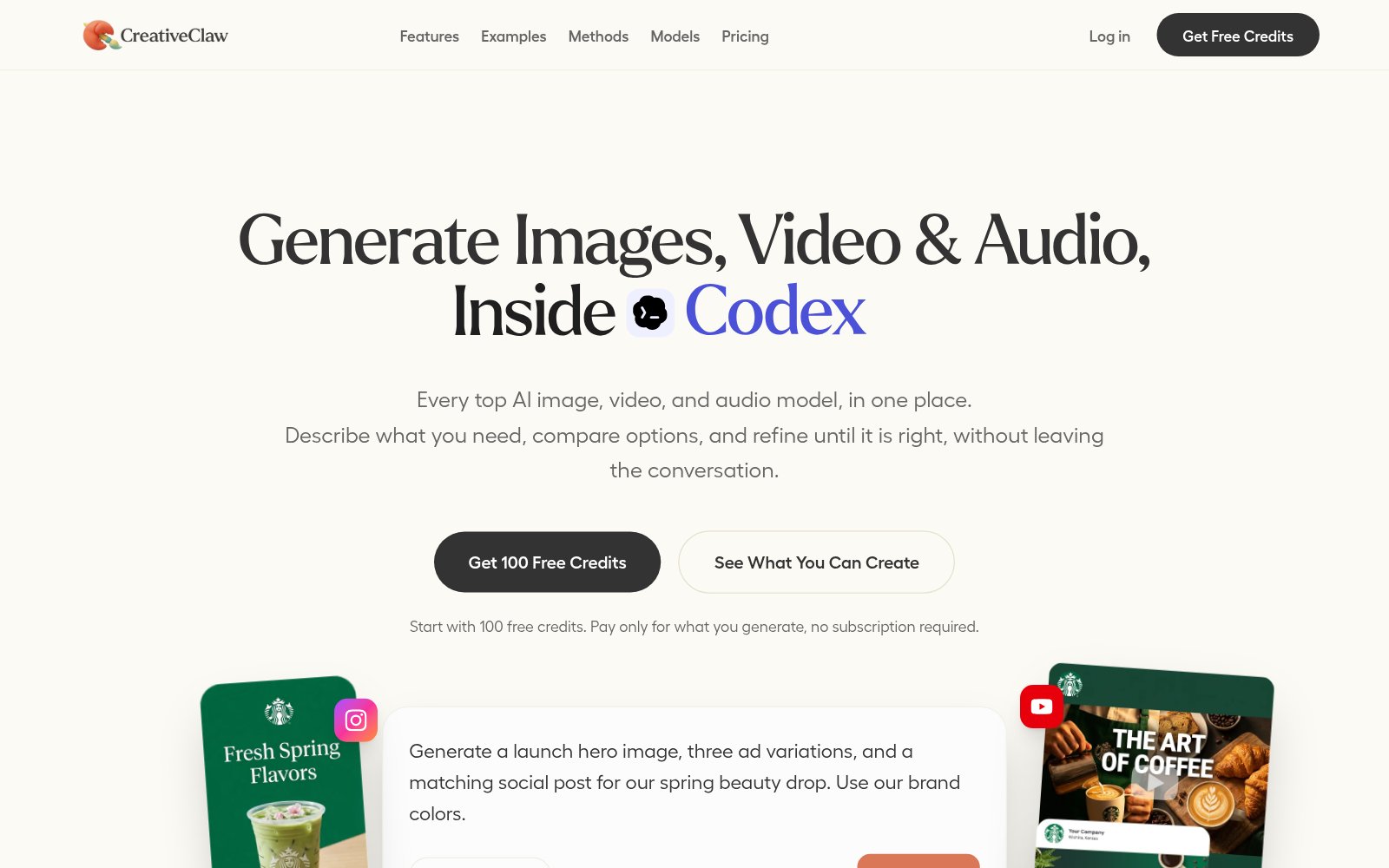
CreativeClaw: one MCP URL that lets Claude, ChatGPT, Claude Code, Codex and OpenClaw generate images, video, voice and music right in the conversation. The website calls it "the Adobe Creative Cloud for AI agents".
Before: He writes that Claude became his "second brain", able to research, write and plan. But every time he needed a campaign image, a social video or a voiceover, he had to leave, open another app, re-explain the context and stitch the results back together (self-reported).
Now: Now you add it to Claude or ChatGPT and just ask for "a launch hero image, three ad variations and a matching social post". The website says it connects dozens of models, including Flux, Seedance, Gemini Omni, Kling and ElevenLabs; built-in skills guide the AI to pick a model, write the prompt, generate several versions and compare them. It can also save brand colors, fonts, logos and recurring characters for every later generation.
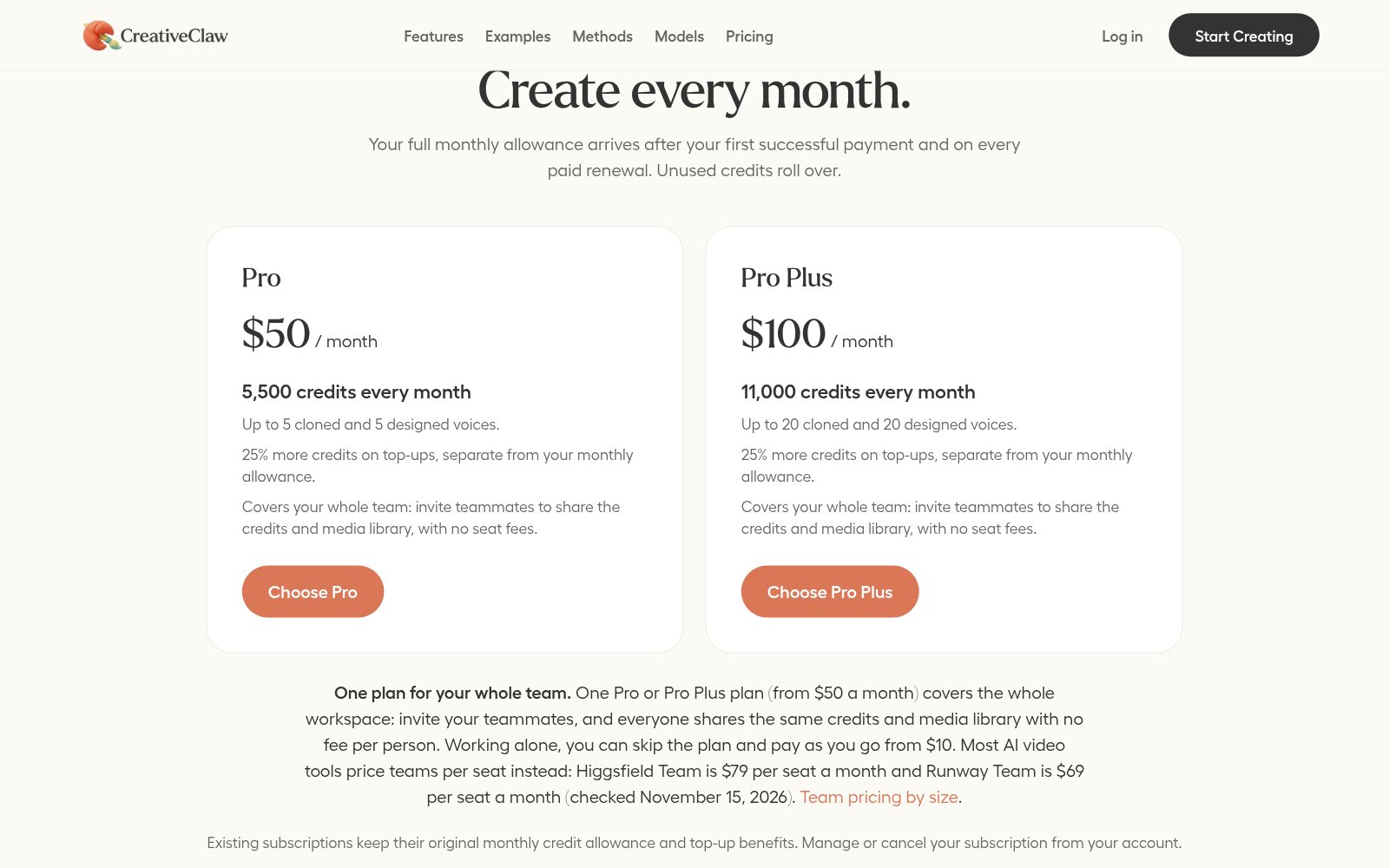
Pricing (pricing page, November 20, 2026): new accounts get 100 credits, no card required; after that $10 buys 1,000 credits that never expire, with no subscription needed. There are also Pro at $50 a month (5,500 credits a month) and Pro Plus at $100 a month (11,000 credits a month), and one plan covers a whole team with no per-seat fees. The website's example: one Nano Banana 2 image costs 12 credits, about $0.12.
How does AI fit in?
The whole business sits on AI: people use it inside an AI assistant, and it calls AI models from many providers.
The starting point: he uses Claude as the "second brain" for his daily work, and it was the constant switching out of Claude to make images and video that led him to build this (self-reported).
The product form: not another dashboard for humans, but a tool for AI assistants. He writes that agents need "tools that live where agents live" (self-reported). On the website, that means one MCP URL plus a set of skills that teach the AI how to use it.
Delivery: you describe what you need, and the assistant picks a model, writes the prompt, generates several versions, compares them and returns the best one; it can also remove backgrounds, add voiceover and compose videos with Remotion (website).
Keep in mind:
- He hasn't shared which AI tool wrote the product's code, or his model costs and margins.
- The ideas and background above come from his own letter on the website, which outsiders can't verify.
How did he find customers?
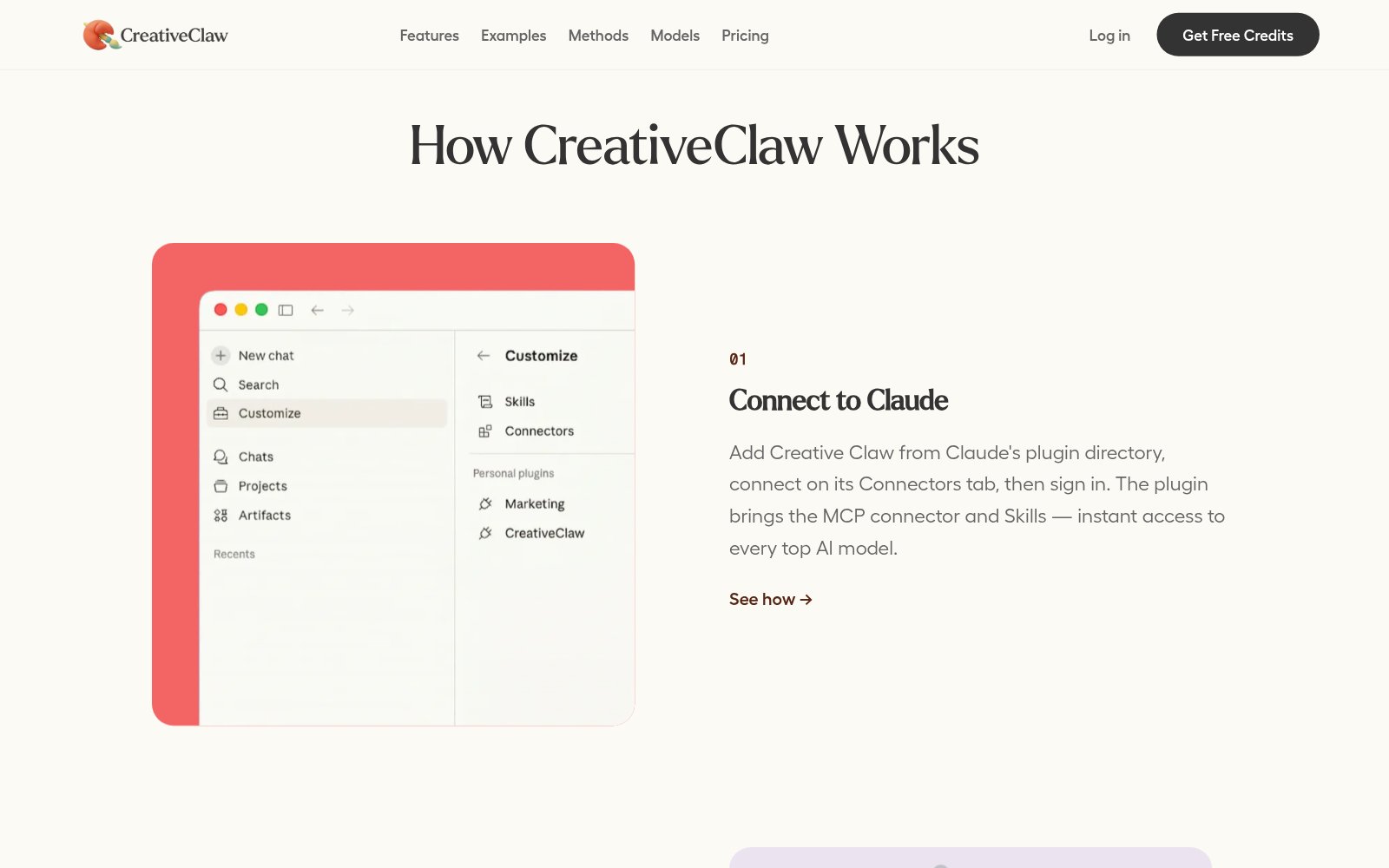
- Getting into the assistants' own plugin directories The website's setup guide says: in Claude you add it from the plugin directory, in ChatGPT you install it from Plugins, Codex has a plugin marketplace command, and Claude Code works with the same account. People find it inside the AI assistant they already use every day.
- One account across many assistants The same account works in Claude, ChatGPT, Claude Code, Codex and OpenClaw, with one set of credits and one media library. Switching assistants doesn't mean paying again.
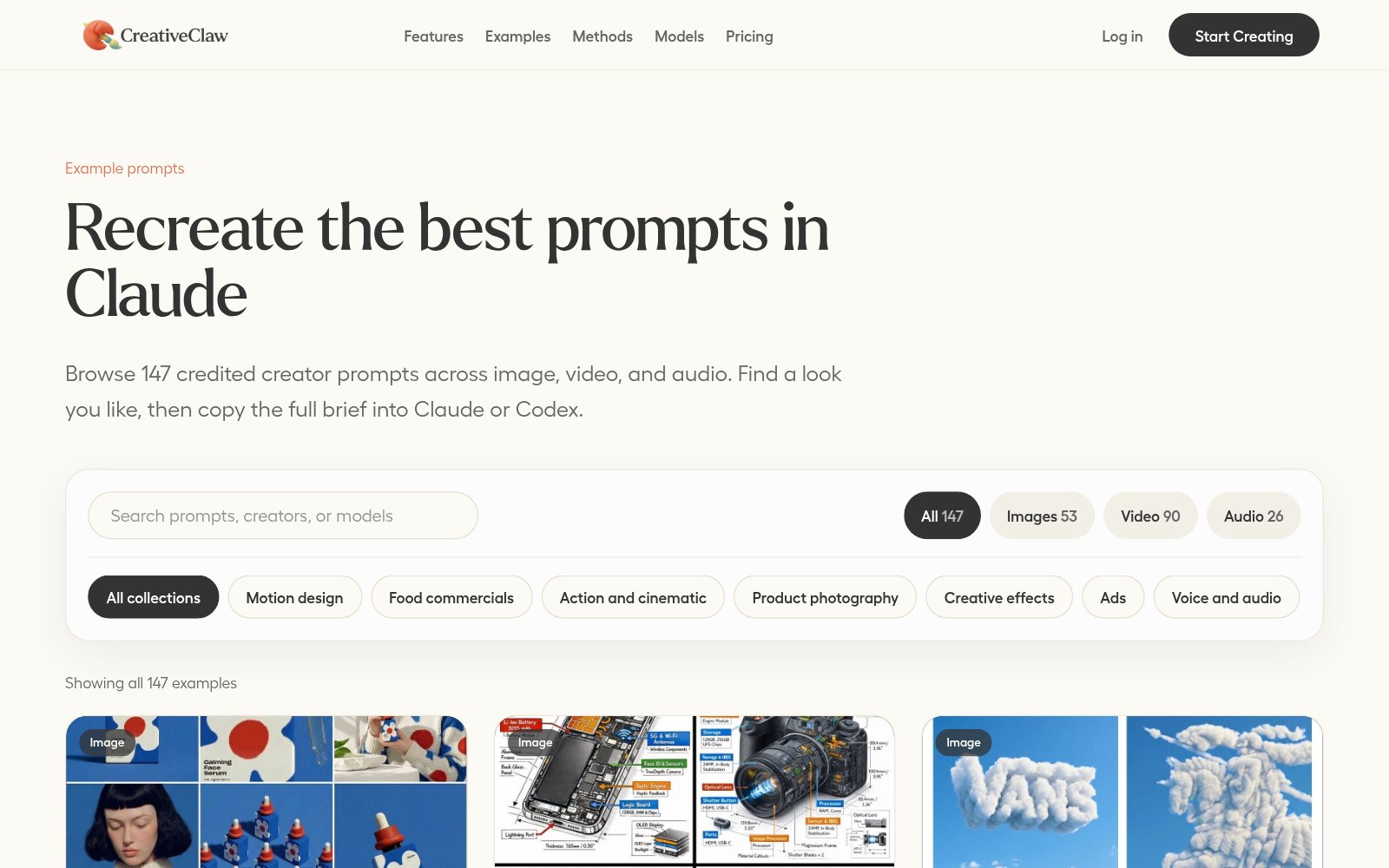
- Lots of pages, one per use case The website footer lists a long run of use-case pages, such as generating images in Claude, AI ads, AI voiceover, virtual staging and release kits for musicians, each stating which model to use and how many credits it costs. The site also publishes an llms.txt file written for AI to read.
- No per-seat pricing for teams The pricing page says one Pro plan (from $50 a month) covers the whole workspace, and compares it with similar video tools that charge per seat (the site dates that comparison November 15, 2026).
Worth knowing
- Only the revenue is verified Polar proves the revenue only. Team size comes from TrustMRR's team field and his X bio; his background, his ideas and website figures like "10,000+ creators" are his and the website's own claims.
- Revenue stepped up in September In the first five months it grew slowly from $30 to $5,254 in August, then jumped to $92,894 in September and $110,939 in October. He hasn't said publicly why September jumped, so don't treat that jump as something you can copy by following the steps.
- Most revenue isn't subscriptions Current MRR is $14,520, yet the last 30 days brought in $112,904. Most of the money comes from credit packs people buy as they go, not fixed monthly fees.
- Revenue is steady Every full day in the last 30 had sales, between $2,685 and $5,929, about $3,770 a day on average. It isn't propped up by one or two big orders.
- He isn't a beginner He writes that he co-founded the AI company theGist and led engineering at OpenWeb (self-reported). That experience helps when building a product that connects dozens of models.
- Revenue isn't profit Every generation has to be paid for with the model providers, plus payment fees and servers. He hasn't shared his costs, so $112,904 is not money in his pocket.
Try it yourself
Itay's path suits people who already work in an AI assistant every day: find the one thing you can't do in the chat and have to leave for, and turn it into a tool the assistant can call directly. He hasn't shared much of his process; every step below has a source, and his own claims are marked "self-reported".
What you'll need
- An AI assistant you use every day (Claude or ChatGPT).
- Some coding ability, or the willingness to learn as you go with a tool like Claude Code.
- An API account with at least one AI model provider for images, video or voice.
- A payment account that can charge by usage; he uses Polar.
- 10–20 hours a week for the first month (our estimate).
-
Find the break in your own AI workflow
What he didHe noticed that whenever he needed an image, a video or a voiceover, he had to leave Claude, open another app and re-explain the context (self-reported).
What you do nowFor one week, every time you leave an AI chat for another tool, write down what for and why you had to. Pick the thing that comes up most.
-
Build a tool for the AI assistant, not another dashboard
What he didHe concluded that agents don't need tools with UIs, they need tools that live where agents live (self-reported). CreativeClaw takes the form of one MCP URL.
What you do nowBuild the feature as an MCP server. Start with one model and one working scenario, for example one sentence in Claude producing a product photo.
-
Bundle a few models and teach the AI to choose
What he didThe website says it connects models such as Flux, Seedance, Gemini Omni, Kling and ElevenLabs; built-in skills guide the AI to pick a model, write prompts and generate several versions to compare.
What you do nowYou don't need dozens on day one. Pick the most-used model for images, video and voice, then write instructions telling the AI when to use which and how to prompt it.
-
Get listed in the assistants' plugin directories
What he didThe website's setup guide says: add it from the Claude plugin directory, install it from ChatGPT Plugins, or install it in Codex with a plugin marketplace command.
What you do nowOnce it works, submit it following the Claude and ChatGPT plugin directory requirements, and publish an llms.txt on your site explaining how to connect and what it costs.
-
Give credits first, then charge by usage
What he didNew accounts get 100 credits with no card; $10 buys 1,000 credits that never expire; Pro is $50 a month and Pro Plus $100 a month, shared by the whole team (pricing page).
What you do nowWork out the model cost of each kind of generation first, then set the price per credit so you keep a margin. The free credits only need to be enough for a first finished result.
-
Write a page for every use case you get working
What he didThe website has many use-case pages, each stating which model to use, what to say in the chat and how many credits it costs.
What you do nowEvery time a scenario works, write a page: who it's for, what to say to the AI, what it costs and what comes out, with real generated examples.
Common beginner mistakes
- Pricing credits without working out model costs, so the more people use it, the more you lose.
- Connecting too many models at the start, none of them tuned, so results are unreliable.
- Charging credits for failed generations, which makes users feel cheated. The website says generations that fail with a server error are refunded automatically.
- Users generating content with someone else's brand, face or voice; write your usage rules up front.
Realistic expectations
CreativeClaw launched in April 2026, and in its first five months monthly revenue grew from $30 to $5,254; from September it reached around $100,000 a month, for reasons he hasn't shared. Most small tools built on AI models earn nowhere near this, and a large share of the revenue goes to model providers. A realistic first goal: get one scenario working, have 10 people use it inside their own AI assistant, then get your first 10 payments.
Tool prices come from each tool's official pricing page, checked on November 20, 2026. Prices change often, so check again before you pay. Times marked "our estimate" are rough guesses for a beginner.
Quick answers
How much has Itay made with CreativeClaw?
As of November 20, 2026, TrustMRR shows $112,904 over the last 30 days, $287,110 all-time and current MRR of $14,520, verified through Polar.
What role does AI play in this business?
The product is an extension of AI assistants: people make requests in Claude or ChatGPT, and it calls AI models to produce images, video and voice. He says he uses Claude as a "second brain" every day (self-reported). He hasn't shared which AI tool wrote the product's code.
How should I start?
For one week, note every time you leave an AI chat for another tool and why. Pick the most common one, turn it into a tool the assistant can call, and get one scenario working first. All 6 steps are in "Try it yourself" on this page.
Is a result like this common?
No. For his first five months he made under $5,300 a month; only from September did it jump to six figures, for reasons he hasn't shared. Most small tools earn very little.
Tools
- Claude: His everyday "second brain" (self-reported), and one of the main AI assistants CreativeClaw plugs into.
- ChatGPT, Claude Code, Codex, OpenClaw: Other AI assistants CreativeClaw also works in.
- MCP: The interface that lets AI assistants call outside tools; CreativeClaw is one MCP URL.
- Flux, Seedance, Gemini Omni, Kling, ElevenLabs and more: The image, video and voice models CreativeClaw calls behind the scenes (website).
- Polar: Payments; TrustMRR reads it to verify revenue.
Sources
- TrustMRR project page, November 20, 2026
- CreativeClaw "letter from the founder" (self-reported), November 20, 2026
- CreativeClaw website, November 20, 2026
- CreativeClaw pricing page, November 20, 2026
- CreativeClaw team plan page, November 20, 2026
- CreativeClaw setup guide (llms.txt), November 20, 2026
- Itay Dressler on X, November 20, 2026
- Official pricing pages for Claude and Polar, checked November 20, 2026
DisclaimerThis is one person's result, summarized from the sources above. It isn't typical, it isn't a promise, and it isn't financial, legal or tax advice.