Alok built Cue, a component library for AI-built websites, on his own. Last 30 days: $2,748, verified via Dodo Payments
AI can build a website fast, but the pages often look the same. He hand-picks great web interactions, pairs each with a prompt and code, and sells them to people who build with AI.
Key points from sources
- TrustMRR project page, November 20, 2026: $2,748 over the last 30 days, $4,219 all-time, current MRR $57.55 (2 active subscriptions), team of 1.
- Monthly revenue on the same page: August 2026 $312, September $667, October $1,524, November (as of the last sync) $1,716.
- TrustMRR lists the founding date as September 1, 2026, while the monthly table already shows $312 in August. Read it as launched around September 2026, with a little revenue in August.
- His own post on X, September 29, 2026: a month earlier Cue was just an idea; now it had 180+ interactions, each with a prompt to rebuild it.
Revenue is read by TrustMRR directly through a Dodo Payments API key; the last sync was 7:43 a.m. on November 20, 2026 (Malaysia time). "First paid user 15 minutes after launch" and "every prompt tuned over 30–80 rounds" are his own claims.
Who is he?
Alok (Alok Srivastava) is an independent developer in India. Cue's website names him as its independent founder, and TrustMRR says it was "built solo, from India." He posts on X as @Alok619308, where TrustMRR shows about 944 followers. When someone asked why he does everything himself, he replied that he can't afford a team yet, so he became one (self-reported).
What did he build?
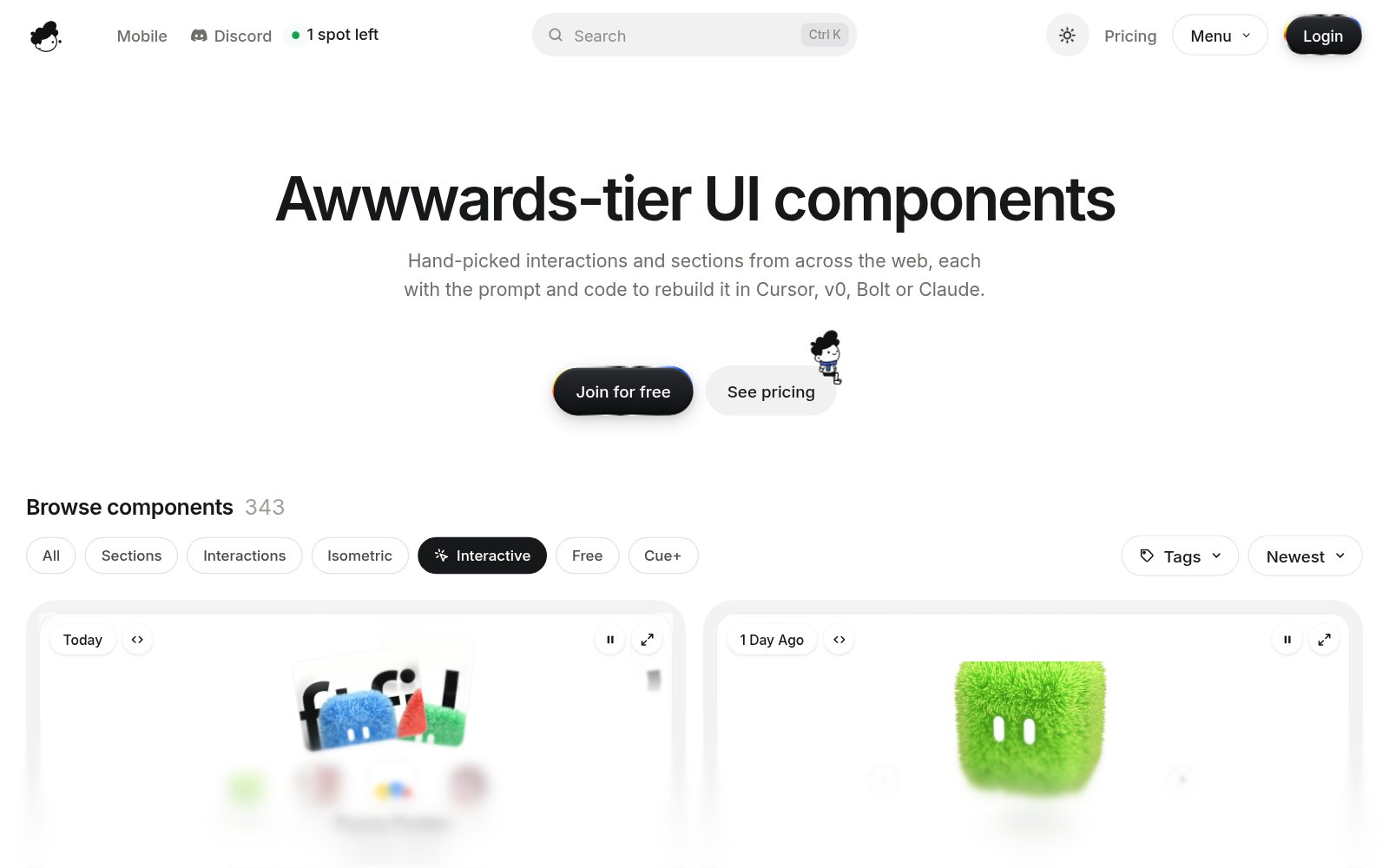
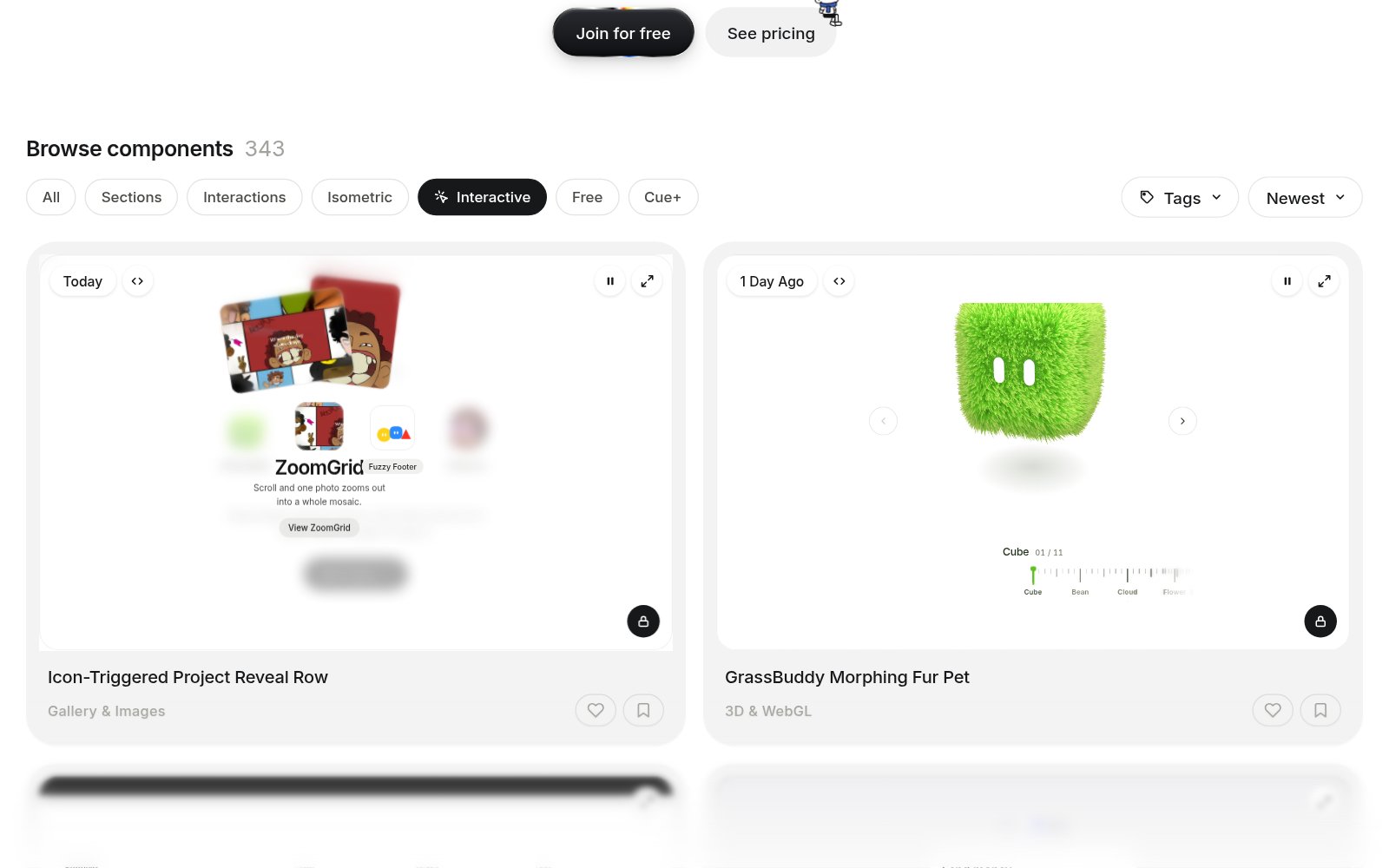
Cue: a hand-picked library of web components. Each comes with a prompt you can paste into Cursor, v0, Bolt or Claude to rebuild it, and most also include React code.
Before: As he put it on TrustMRR, AI can build any website now; what it can't do is make it look good. People building with AI often end up with the same gradient hero and template-looking pages.
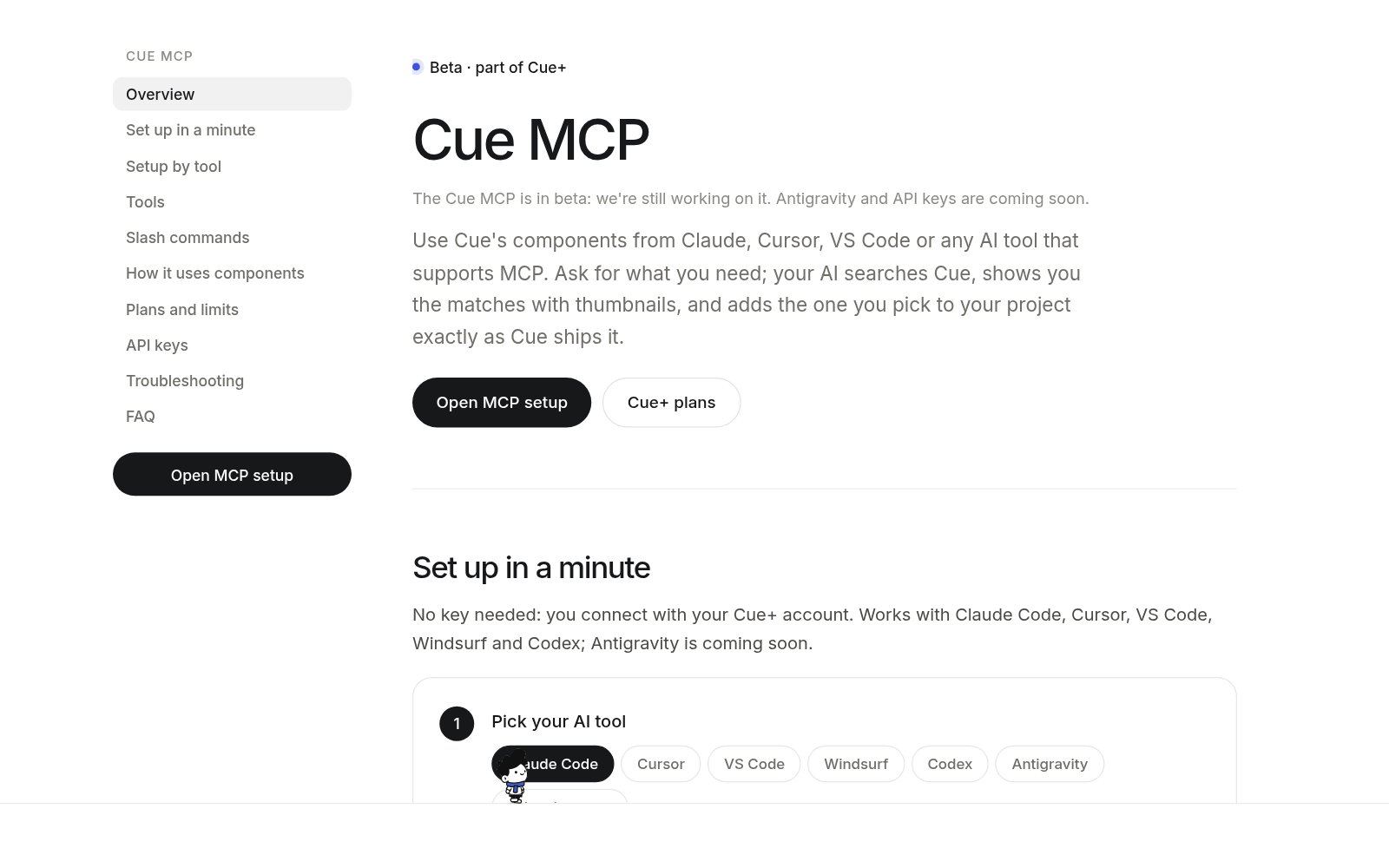
Now: Cue now holds 300+ interactions and sections picked from Awwwards-winning sites, Behance features and well-made products. The website says 260+ of them ship with full React/TSX code, and an MCP server lets tools like Claude Code and Cursor write a component straight into your project.
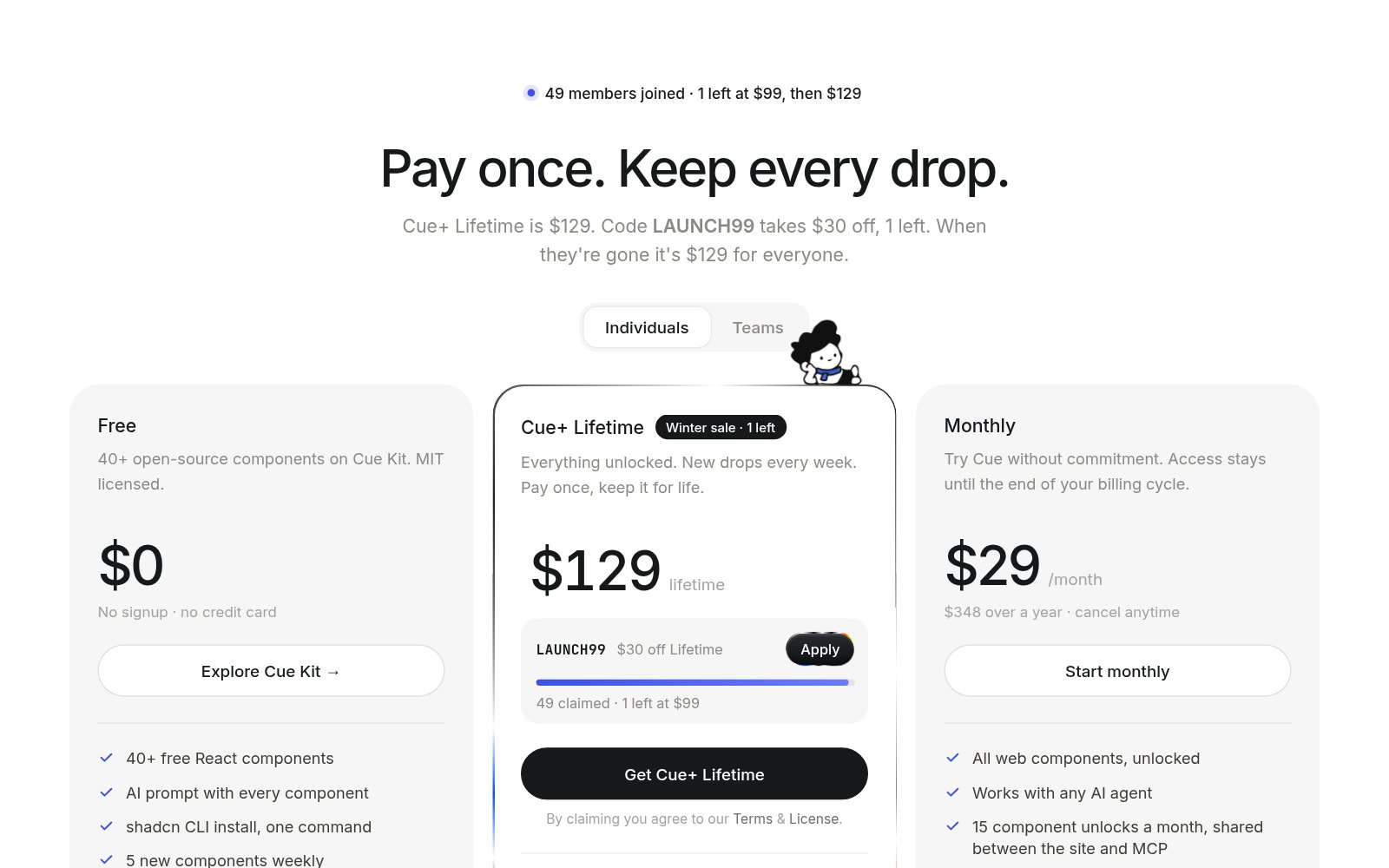
Pricing (Cue pricing page, November 20, 2026): the free tier includes 40+ open-source components; Cue+ Lifetime is $129 one-time, with code LAUNCH99 taking $30 off and the page showing 1 spot left; there is also a $29 monthly plan. It used to be cheaper: he said on X that lifetime access was $79 on launch day, September 29, 2026.
How does AI fit in?
AI shows up in three places: the product itself is made for AI tools, the prompts are tuned by running them through AI again and again, and the promo videos are made with AI too.
The product: every component comes with a prompt that rebuilds it in Cursor, v0, Bolt or Claude. He says on TrustMRR that each prompt went through 30–80 rounds against real reference sites (self-reported).
Launch video: on September 29, 2026, he posted on X that Claude made the launch video from one prompt, including motion graphics, timing and render (self-reported).
Promo film: on November 15, 2026, he said he gave Claude one reference reel and got back a full edit with script, voice, captions and cuts. It was his first time editing anything (self-reported).
Keep in mind:
- He hasn't said which AI tool wrote the website's own code, and he hasn't shared a cost breakdown.
- The "30–80 rounds" figure is his own and can't be checked from the outside.
How did he find customers?
- Building in public on X His September 29, 2026 launch post came with the video Claude made; X shows about 13,800 views. On October 2 he posted Cue 2.0, a redesign with 200+ interactions and 5–10 new ones a day (self-reported).
- One post, the best day On October 26, 2026 he posted just "Best UI component library for Claude" and a link; X shows about 46,000 views and 784 bookmarks. TrustMRR records $99 on October 26 and $413 on October 27 (UTC), the highest single day in the last 30 days.
- Launching on Product Hunt He wrote on TrustMRR that the first paid user arrived 15 minutes after the Product Hunt launch, and revenue passed $900 in 16 days (self-reported).
- Letting users ask for components On November 10, 2026 he added a request feature and said the first request was built and live the same day (self-reported). The website also carries a file written for AI assistants that explains what Cue is and how it differs from other libraries.
Worth knowing
- Only the revenue is verified Dodo Payments proves the revenue. Team size, the number of prompt rounds and the Product Hunt results are his own claims.
- Most of it is one-time money Current MRR is only $57.55, yet the last 30 days brought in $2,748, so most of it comes from one-time payments such as lifetime plans. That kind of revenue doesn't renew; every month needs new buyers.
- The revenue is spread out 18 of the last 30 days had sales, and the best day was $413. It isn't propped up by one or two big orders.
- It's still early It launched around September 2026 and had $4,219 all-time by November 20. That's two or three months of results, not a steady business yet.
- He is selling it TrustMRR shows Cue listed for sale since November 7, 2026, with an asking price of $50,000. Keep in mind that the founder is looking for a buyer.
- Revenue isn't profit Payment fees, AI subscriptions and hosting come out first. TrustMRR shows a 93% profit margin for the last 30 days, but the costs aren't broken down publicly.
Try it yourself
Alok's path suits people with a good eye: AI can build things, but it doesn't know what looks good. Turn your taste into material AI can use directly, and sell it to people who work with AI. He hasn't shared much of the process; each step below has a source, and anything he said himself is marked "self-reported".
What you'll need
- A field where you can really tell good from bad. His is web interaction and visual design.
- An AI account (Claude or Cursor) for testing prompts over and over.
- A payment account that can sell digital products. He uses Dodo Payments.
- An X account for sharing progress in public.
- 10–20 hours a week for the first month (our estimate).
-
Find something AI can build but can't build well
What he didWhat he noticed: AI can build any website, it just can't make it look good. So he positioned Cue as a "taste layer" for AI.
What you do nowLook at what people build with AI and note what gets called out as "obviously AI-made" most often. Pick something where you can tell good from bad yourself.
-
Hand-pick great examples and sort them by category
What he didHe picked interactions from Awwwards, CollectUI and X, and sorted them into 20+ categories such as 3D, navigation, forms, pricing and motion (self-reported).
What you do nowStart with 30 examples you genuinely think are great. For each, write down what makes it good and where it belongs on a page.
-
Write a prompt that lets AI rebuild each example, and keep testing
What he didHe says each prompt went through 30–80 rounds against real reference sites (self-reported), and he later added React code to most components.
What you do nowRun the prompt in an AI tool and compare the result side by side with the original until it looks right on the first try. Only ship what you have tested yourself.
-
Build a site where people can browse and pay
What he didThe tech stack listed on TrustMRR is React, Supabase, Cloudflare, Vercel, Node.js and Dodo Payments.
What you do nowThe first version needs three things: browsing, a few free prompt copies, and everything unlocked after payment. Start on the free tiers for database and hosting.
-
Give some away, charge for everything
What he didFree users can browse and copy a few prompts a day, and the site now also open-sources 40+ components. The paid plan is lifetime: $79 on launch day, $99 for the first 50 members, now $129, plus a $29 monthly option.
What you do nowMake the free part good enough to build one nice page; sell "everything plus future drops". Start with a limited early-bird price.
-
Post in public, again and again
What he didHe launched on X with the video Claude made, posted Cue 2.0 three days later and went on Product Hunt; a short post on October 26 led to the best day of the last 30.
What you do nowPost every time you finish a batch: a short video or GIF of the result, plus a link. Note which posts are followed by sales.
Common beginner mistakes
- Listing prompts you haven't tested. If a buyer's result doesn't match, they will ask for a refund.
- Copying another site's images, text or branding as-is when rebuilding its interaction.
- Thinking one viral post is enough. After October 27, his daily revenue ranged from $0 to $345.
- Charging once for lifetime access but updating forever, without counting the long-term time cost.
Realistic expectations
From its launch around September 2026 to November 20, Cue made $4,219 in total and $2,748 in the last 30 days, but recurring subscription revenue is only $57.55 a month. Most small digital products earn very little, or nothing. A realistic first goal: make 30 components you're happy with, get 10 people to use them for free, then land your first 5 payments. Payment fees and AI subscriptions will take a share of the revenue.
Tool prices come from each tool's official pricing page, checked on November 20, 2026. Prices change often, so check again before you pay. Times marked "our estimate" are rough guesses for a beginner.
Quick answers
How much has Alok made with Cue?
As of November 20, 2026, TrustMRR shows $2,748 over the last 30 days and $4,219 all-time, verified through Dodo Payments.
Which AI tools did he use?
The one he has talked about is Claude, for the launch video and promo film. Cue's prompts are made for tools like Cursor, v0, Bolt and Claude. He hasn't said which AI wrote the website's own code.
How do I get started?
Pick a field where you can tell good from bad, hand-pick 30 great examples, and write and test a prompt that lets AI rebuild each one. All 6 steps are in "Try it yourself" on this page.
Is this kind of result common?
No. He has only about 944 followers, yet a single post got about 46,000 views. Most small digital products earn very little.
Tools
- Claude: He used it to make the launch video and promo film; it is also one of the tools Cue's prompts work in.
- Cursor, v0, Bolt: The AI site builders Cue's prompts and components are made for.
- React: Front end (TrustMRR tech stack).
- Supabase, Vercel, Cloudflare: Back end and hosting (TrustMRR tech stack).
- Dodo Payments: Takes payments; TrustMRR reads it to verify revenue.
Sources
- TrustMRR project page, November 20, 2026
- Cue website, November 20, 2026
- Cue pricing page, November 20, 2026
- His launch post on X (self-reported), September 29, 2026
- His Cue 2.0 post on X (self-reported), October 2, 2026
- His post on X, "Best UI component library for Claude", October 26, 2026
- His post on X about the request feature (self-reported), November 10, 2026
- His post on X about editing a promo with Claude (self-reported), November 15, 2026
- His reply on X, "so i became one" (self-reported), November 16, 2026
- Official pricing pages for Claude, Cursor, Supabase, Vercel and Dodo Payments, checked November 20, 2026
DisclaimerThis is one person's result, summarized from the sources above. It isn't typical, it isn't a promise, and it isn't financial, legal or tax advice.