Michael Rode built the body-composition app GainFrame on the side, alone, with Claude Code. Last 30 days: $2,299, verified via RevenueCat
He has a day job and a new baby, and puts in about two focused hours a day. When ads didn't pay off, he stopped them all and moved to a blog, free tools and AI-drawn comic posts.
Key points from sources
- TrustMRR project page, November 19, 2026: $2,299 over the last 30 days, $2,462 MRR, 485 active subscriptions, $21,058 all-time.
- His own write-up, July 10, 2026: four months after launch, $944 MRR, up 45% in a month, 203 subscriptions.
- Same write-up: $5,674 spent on ads over three months, all stopped on May 10.
- His sale note on TrustMRR: he's a new dad with a full-time job and another project, and doesn't have enough time for the app.
Last-30-day revenue is read by TrustMRR through RevenueCat. Ad spend, traffic, conversion rates and costs are his own figures.
Who is he?
Michael Rode is a backend engineer with 15 years in software and 20 years of strength training. He lives in Wilmington, North Carolina. He has a full-time job, a new baby and about 49 followers on X. He says the whole app runs on roughly two focused hours a day.
What did he build?
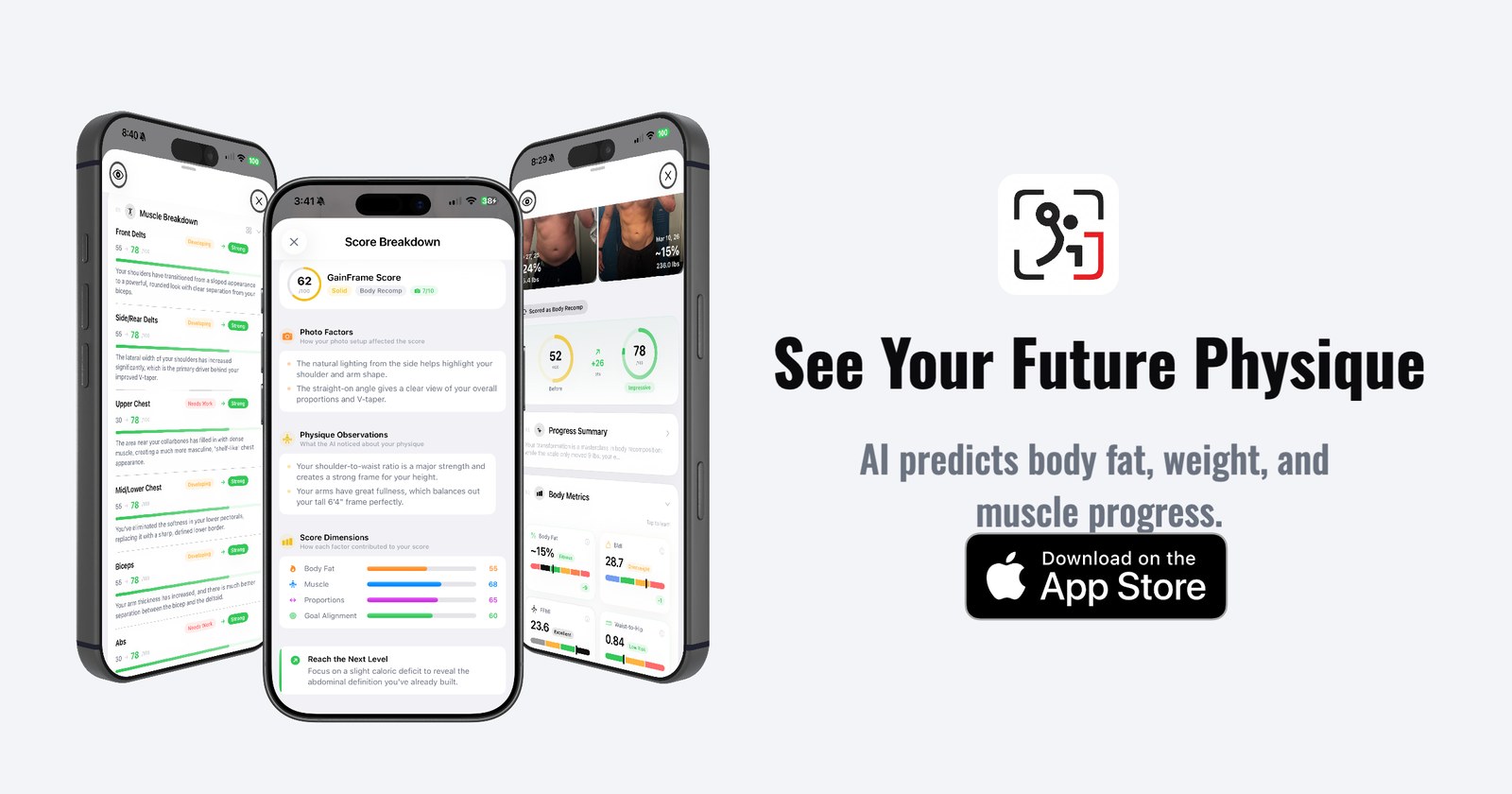
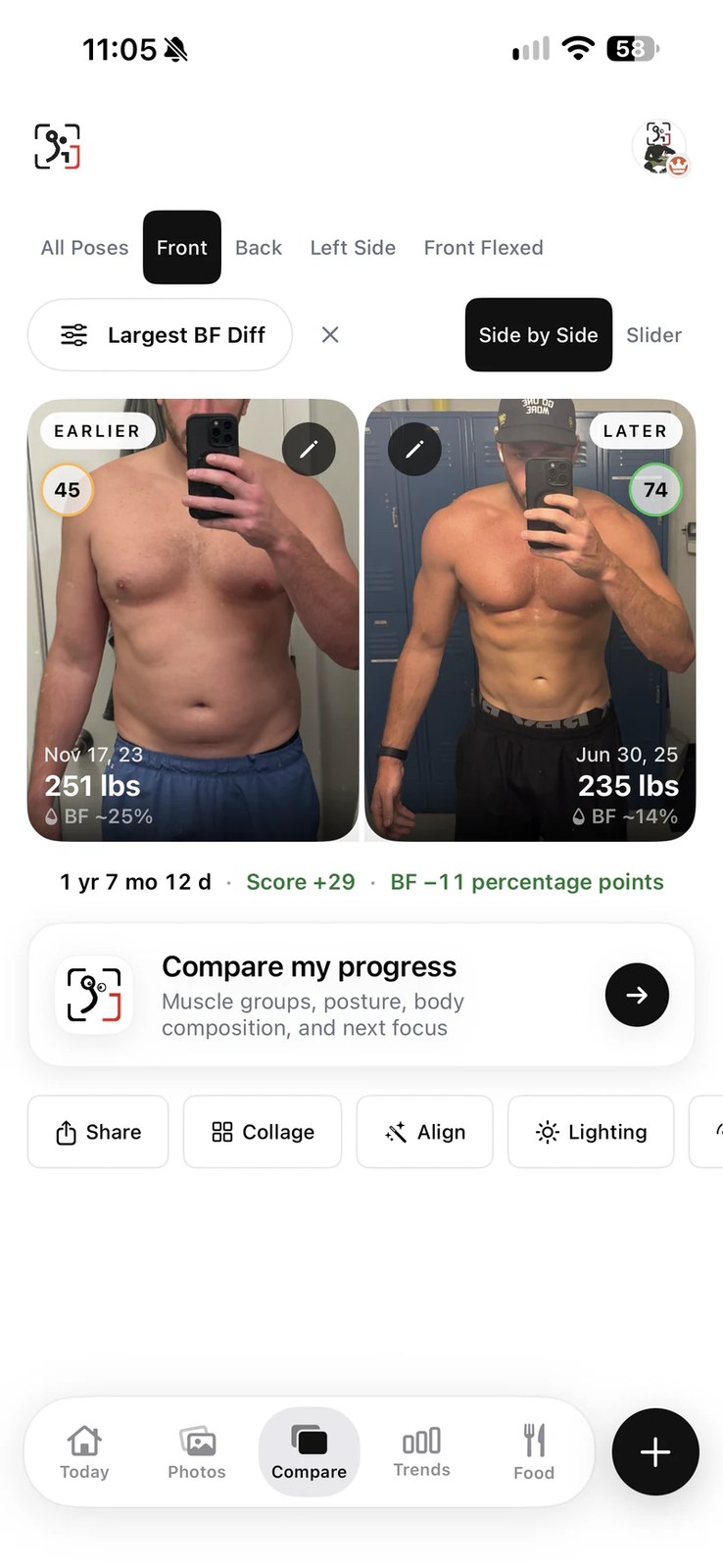
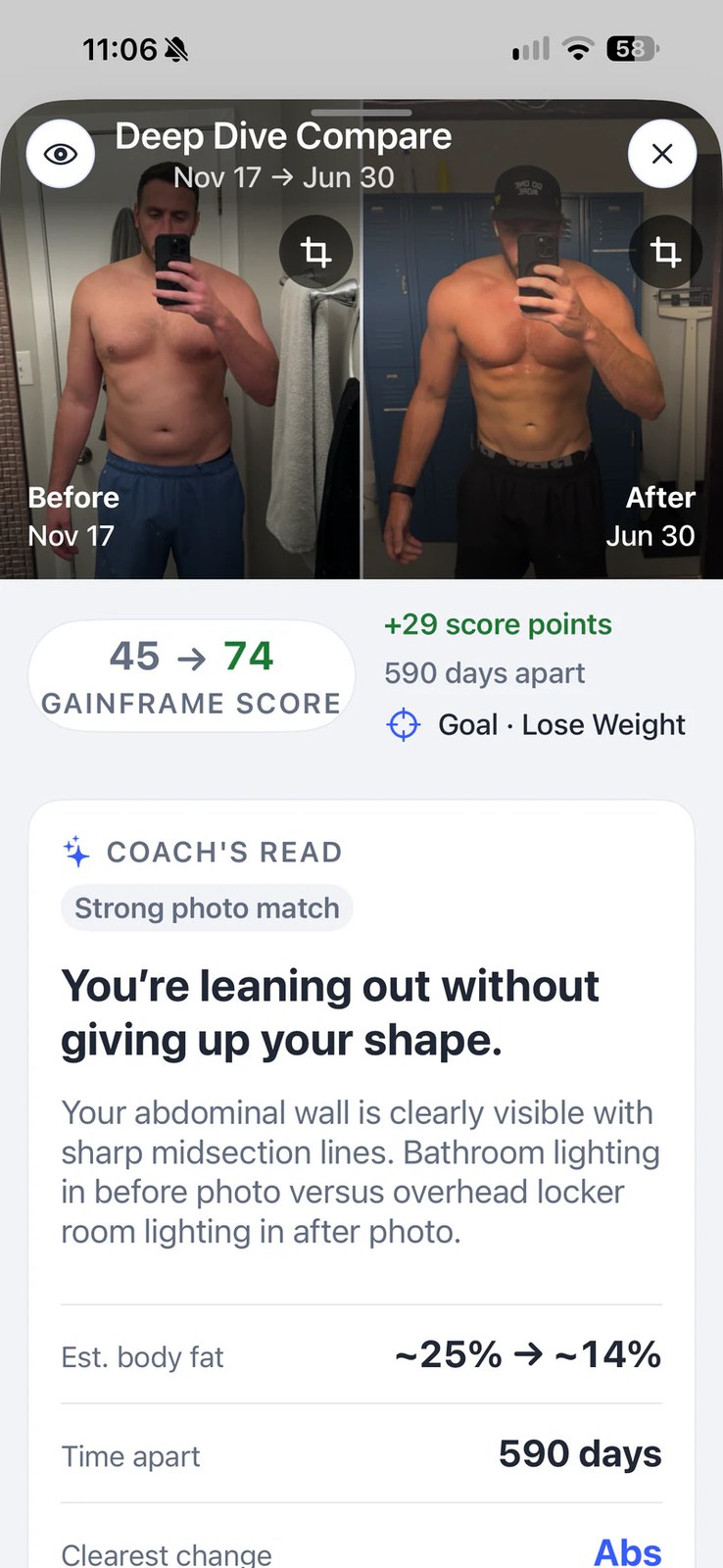
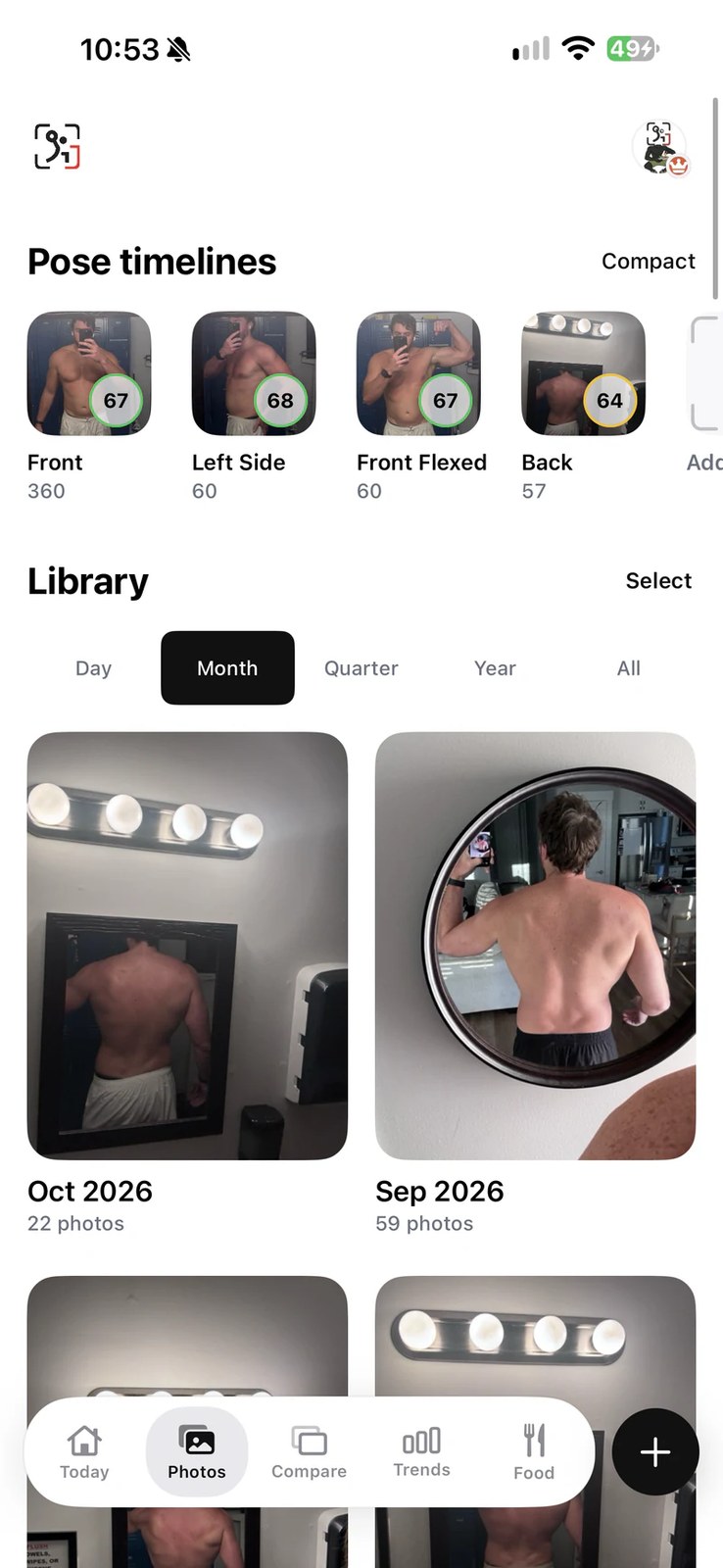
GainFrame: an iPhone app that takes one progress photo, estimates body fat, gives a physique score and rates 12 muscle groups, then lets an AI coach answer questions using your own data.
Before: He had paid for two expensive DEXA scans and taken years of progress photos he never looked at again.
Now: One photo now gives a body-fat estimate and per-muscle scores, and the AI coach answers from your real check-ins. The app launched on the App Store in March 2026. It's free to download, with paid Pro plans inside the app.
The yearly plan is $39.99 with a 7-day free trial. The monthly plan has no trial.
How does AI fit in?
AI shows up in three places: writing the code, the product itself and the marketing content.
Writing the code: he says Claude Code writes most of it. The project has a rules file (CLAUDE.md) covering architecture, design components and what never to touch, so every AI session writes code that matches the app. Releases, testing and SEO each run as a one-command Claude Code skill.
The product: the AI coach and body reports run on Gemini (he names Gemini 3.5 Flash). He says it's his biggest running cost, about $260 a month.
The marketing: he posts comic carousels on TikTok and Instagram starring a mascot, "GainFrame Guy." Gemini draws the art and a Python script adds all the text. He says the art costs about 4 cents a slide, and he has made more than 150 carousels.
Real problems he has written about:
- At first he let the image model render the text, and every slide came out in a slightly different style. The account looked like a garage sale. Things only became consistent once AI drew the art and code handled the words.
- Body reports used to run on a higher-tier model and took 35 to 44 seconds. After switching to Flash in late May they took 10 to 15 seconds, with no complaints about quality. In his words, people don't cancel because a report isn't eloquent enough; they cancel when it takes 40 seconds.
- His analytics once missed about 80% of trial conversions: his analytics tool logged 10, while RevenueCat counted about 48. He spent weeks optimizing against the wrong numbers.
- To keep AI costs from running away, he set alerts for more than $35 a day across the app or more than $5 a day for any single user.
How did he find customers?
- Tested ads, did the math, stopped He spent $5,674 on ads over three months: $2,498 on Apple Search Ads for 443 installs at $5.64 each; $1,881 on TikTok, with cheaper installs but weaker trials; and $1,295 on Reddit, with almost no tracked conversions. Against a paying user's lifetime value of about $18, the best case was about $114 to win one paying user, so he stopped everything on May 10.
- Comic carousels that start arguments Covers pose myth-busting questions like "Will cardio kill your gains?" Arguments in the comments bring reach. The app appears in only 1 of every 3 carousels, and only on the last slide, so the account doesn't read like an ad. Captions are one casual line plus exactly five hashtags.
- Free tools people search for His site has 11 free fitness calculators and 141 articles. He says free calculators are his best source of backlinks and rankings, ranking faster and longer than articles. Organic search clicks grew from about 7 a day to about 100 in 90 days. His best page, a roundup of the best AI body-fat apps, gets about 170 clicks a week.
- Comparisons and roundups before explainers According to his Search Console data, "best X apps" and "X vs GainFrame" posts get clicks because readers are already choosing. Explainer posts mostly get answered by AI summaries, and almost nobody clicks through.
- Watching every cancellation Every subscription event goes to his Slack. When someone cancels a trial, he sometimes emails them the same day to ask why. He says the answers are more useful than any survey.
Worth knowing
- Only the revenue is verified RevenueCat confirms the revenue. His ad math, traffic, conversion rates and costs are his own figures.
- Revenue isn't profit Apple's commission, AI costs (about $260 a month by his count) and the $99-a-year developer membership come out first.
- He's an experienced engineer Fifteen years of backend work makes it much easier to check code an AI wrote.
- The app is for sale He has listed GainFrame for sale on TrustMRR because he doesn't have enough time. Side projects only get so many hours.
- It's an estimate, not medical advice His own site says GainFrame is a tracking tool, not a clinical measurement or medical advice.
Try it yourself
You don't need a fitness app to use Michael's most useful moves. The steps below follow the order he recommends at the end of his write-up, and they fit an app, template or membership product you have or plan to build.
What you'll need
- A product that charges monthly, or one you're building.
- A Claude Pro account, which includes Claude Code.
- A subscription payment tool. For an iPhone app, you also need the Apple Developer Program.
- A simple website for free tools and articles.
- For carousels: TikTok and Instagram accounts, plus an AI image API.
- About two focused hours a day, his own estimate for his pace.
-
Write a rules file for the AI first
What he didHe keeps a CLAUDE.md in the project covering architecture, design components and what never to touch, and lets Claude Code write most of the code.
What you do nowBefore you build, write one page of rules: which screens exist, which colors and components to use, what must never change. Have the AI read it before every coding session.
-
Connect a subscription tool and send every subscription change to your phone
What he didHe uses RevenueCat for subscriptions. Purchases, renewals, cancellations and billing failures all post to Slack; he says this took one evening.
What you do nowUse a ready-made subscription tool instead of writing billing yourself. Turn on subscription event notifications so every cancellation reaches you directly.
-
Get your numbers right before optimizing
What he didHis analytics missed about 80% of trial conversions, and he optimized against the wrong numbers for weeks. After fixing tracking, trial-to-paid rose from 21% to 44% in five weeks with no ad spend (his own figures).
What you do nowCompare the conversion numbers in your analytics tool with the numbers in your payment tool. When they don't match, trust the payment tool.
-
Build two or three free tools people search for
What he didHe built 11 free fitness calculators and says they rank faster and longer than articles. The one that calls AI is limited to one use per device per day so it doesn't eat his AI budget.
What you do nowPick two calculators your buyers already search for, put them on your site and link each one to your product. Cap usage on any tool that spends your API money.
-
Write comparisons and roundups before explainers
What he didHe found that "best X apps" and "X vs Y" posts get clicks because readers are already choosing, while explainers mostly get answered by AI summaries.
What you do nowStart with one honest comparison: your product against the best-known alternative, with the strengths and weaknesses of each.
-
Let AI draw, and let code handle the words
What he didHe has Gemini draw only the mascot and adds all text with Python, at about 4 cents a slide (his own figure). The app appears in only 1 of every 3 carousels, on the last slide.
What you do nowDesign a simple character and one fixed layout. Have AI produce only the art, and add the words yourself. Promote your product in only 1 of every 3 posts.
-
If you run ads, test small and measure by paying users
What he didHe spent $5,674 over three months and found the best case was about $114 to win a paying user worth about $18, so he stopped everything (his own figures).
What you do nowSet a small cap first. Divide spend by paying users, not installs. If winning a user costs more than that user brings in, stop.
Common beginner mistakes
- Letting an AI image tool write the text, so every slide looks different.
- Promoting the product in every post until the account reads like an ad.
- Judging ads by installs or clicks instead of paying users.
- Trusting your analytics without checking it against your payment tool.
- Making medical claims for a health product. He states his app is a tracking tool, not medical advice.
- Running AI features without a spending cap.
Realistic expectations
GainFrame launched in March 2026, and as of November 19 it had $2,299 in revenue over the last 30 days. Michael is an experienced engineer, and even so, a day job and a new baby led him to list the app for sale. Most small apps make little or nothing. A realistic first goal is two free tools in your first month, then your first 10 paying users. Apple's commission, AI costs and fees all come out of revenue.
Tool prices come from each tool's official pricing page, checked on November 19, 2026. Prices change often, so check again before you pay. Times marked "our estimate" are rough guesses for a beginner.
Quick answers
How much did Michael Rode make with GainFrame?
As of November 19, 2026, TrustMRR shows $2,299 over the last 30 days, $2,462 MRR and $21,058 all-time, verified via RevenueCat.
Which AI tools does he use?
Claude Code for the code; Gemini for the in-app AI coach and body reports; and Gemini again to draw the marketing comics.
How do I start?
Write a rules file for the AI, connect a subscription tool with cancellation alerts, then make your analytics match your payment numbers. All 7 steps are under "Try it yourself" on this page.
Is this result typical?
No. He has 15 years of engineering experience, and the app is now for sale because he lacks the time. Most small apps make very little.
Tools
- Claude Code: Writes most of the code; releases, testing and SEO each run as one command.
- Gemini: Runs the AI coach and body reports, and draws the marketing comics. He puts the in-app cost at about $260 a month.
- RevenueCat: Manages subscriptions; TrustMRR verifies revenue through it.
- Apple Developer Program: Publishes the app on the App Store.
Sources
- TrustMRR project page, November 19, 2026
- Michael Rode, "Every Tool and System Behind My $944 MRR iOS App", July 10, 2026
- GainFrame About page, November 19, 2026
- AI Paid Me: GainFrame, Checked November 16, 2026
- Claude, RevenueCat, Apple Developer Program and Gemini API official pricing pages, Checked November 19, 2026
DisclaimerThis is one person's result, summarized from the sources above. It isn't typical, it isn't a promise, and it isn't financial, legal or tax advice.